 Tap to zoom
What Is a Bladder Polyp and How Is It Treated?
What is a bladder polyp? Is it cancer? Blood in the urine, diagnosis, biopsy, causes, treatment, transurethral surgery (TURBT), recovery, and follow-up care.
- Published on
- June 26, 2026
- Reading time
- 5 min read
- Last updated
- Updated: June 26, 2026
A bladder polyp is a growth that develops on the inner wall of the bladder and is usually diagnosed during tests such as ultrasound or cystoscopy. These growths may be benign or, in some cases, require more detailed evaluation; for this reason, timely identification is very important.
In this article, we will discuss bladder polyps, their possible signs and symptoms, causes, diagnostic methods, and treatment. Stay with us for more information and details.
Urologist Bladder disease specialist
Note: To improve care quality and patient satisfaction, appointments are triaged by reason for visit. Each physician sees patients within the relevant urology subspecialty.
Book appointment
What Is a Bladder Polyp?
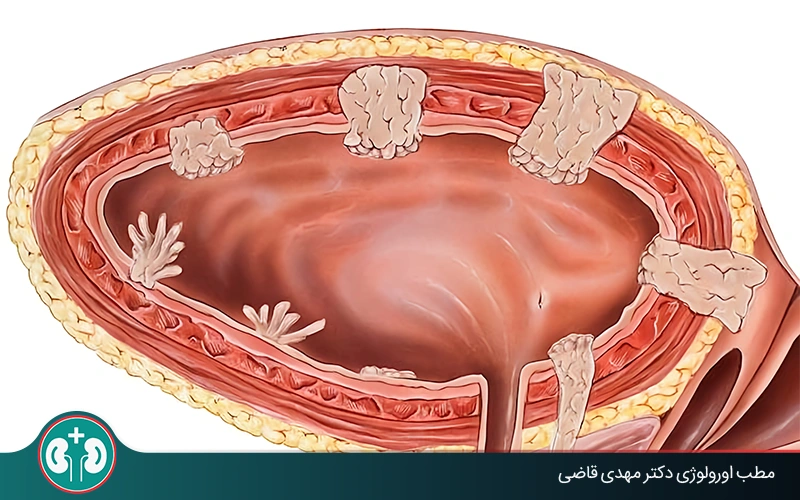
A bladder polyp is an abnormal tissue growth or protrusion that forms on the inner wall of the bladder. This growth can have different shapes and appearances and is not always seen in one specific form.
Some polyps are small and soft masses, while others may appear in the bladder as raised lesions with an irregular surface or a cauliflower-like appearance.
Masses with this raised, irregular appearance are called bladder polypoid masses or cauliflower-like masses.
Appointments related to Urologist Bladder disease specialist
Public recorded-slot data is available for this destination.
Book appointment
Difference Between a Polyp and a Bladder Tumor
A polyp does not always mean bladder cancer ; rather, it is a general term for any abnormal growth. By taking a sample (biopsy) from the polyp and examining it in the laboratory, the physician can determine the exact nature of the polyp. For this reason, early diagnosis and careful evaluation of a polyp prevents unnecessary concern and clarifies the correct treatment pathway.
The key point about bladder polyps is that the presence of a polyp does not necessarily mean cancer, and polyps can be benign or malignant. Benign polyps usually grow slowly and remain in the same place, whereas malignant (cancerous) polyps can invade surrounding tissues and spread.
Symptoms of Bladder Polyps
Symptoms of a bladder polyp can vary depending on its size and type. In many cases, polyps are small, cause no symptoms, and are discovered only incidentally on ultrasound or examination. However, some polyps have specific symptoms. Below, we discuss the most important symptoms of bladder polyps:
Q&A — Urologist Bladder disease specialist
General questions are shown on the destination page after review.
Book appointment
Blood in the urine (hematuria or Hematuria): This is the main sign and may be completely visible (pink, red, or brown urine) or so small in amount that it is detectable only with microscopic tests.
Change in urinary habits: These include frequent urination, pain or burning during urination, and urgency to urinate even when the bladder is empty.
Pain in the pelvic or flank area: In rare cases, large polyps can cause discomfort or pain in the pelvic or flank area.
When Should You See a Doctor?
The best time to see a doctor is when you notice any unusual change in your urine. If you see blood in the urine even once, or have symptoms such as frequent urination, persistent burning, or pelvic pain, you should promptly see a urology specialist.
Causes of Bladder Polyps
The exact cause of many of these polyps is not fully known, but several risk factors increase the likelihood of developing them. These factors include:
Smoking: Tobacco use is the most important risk factor for bladder polyps, especially the malignant type. Chemicals in cigarette smoke are absorbed by the body, then excreted through the urine and damage the bladder wall.
Chronic urinary tract infections: Recurrent and long-term infections or inflammations in the bladder can cause changes in the cells of the bladder wall.
Age and sex: Bladder polyps are usually more common in older people, and bladder polyps are more prevalent in men than in women.
Exposure to chemicals: People who work in certain industries, such as dyeing, rubber, heavy metals, or textiles, and are exposed to specific chemicals are at higher risk.
Family history: Having a family history of bladder cancer can increase the risk.
These are mostly recognized as shared risk factors for bladder diseases, especially bladder cancer, and their presence alone does not mean definite bladder polyp disease. These factors only increase the likelihood of abnormal changes in the bladder wall, and accurate diagnosis of the lesion type requires specialized medical evaluation.
Methods for Diagnosing Bladder Polyps
Bladder polyps are usually diagnosed using a combination of imaging methods and specialized evaluations. The physician first uses noninvasive methods such as ultrasound to view the shape and location of the lesion, but to confirm whether a polyp is benign or malignant, more precise steps such as cystoscopy and ultimately bladder biopsy are necessary.
This diagnostic pathway is designed from the simplest to the most definitive method so that the patient experiences the least harm and diagnosis is made with high accuracy. Below, we explain more about methods for diagnosing bladder polyps:
1. Ultrasound and Imaging
Most often, the first step in diagnosing a bladder polyp is using imaging methods such as bladder ultrasound. Ultrasound is a fast, noninvasive method that can show the presence of a growth or the shape of a bladder polyp. However, regarding this method, you should keep 2 points in mind:
1. Ultrasound can only report the presence of a mass and cannot determine whether it is benign or malignant.
2. Very small polyps may not be seen on ultrasound.
Therefore, ultrasound is only an initial screening method and is not considered a definitive diagnostic tool for bladder polyps.
2. Cystoscopy and Biopsy
Cystoscopy is a more accurate method for examining the inside of the bladder. In this method, the physician uses a thin tube equipped with a camera to look directly inside the bladder and examine the shape of the polyp more carefully. If needed, during cystoscopy a tissue sample is taken from the polyp; this is called sampling or bladder biopsy.
The collected samples are sent to a laboratory to be examined under a microscope by a pathologist. A definitive diagnosis of whether a polyp is benign or malignant is possible only through the biopsy result. Simply put, without biopsy, final diagnosis is not possible.
Treatment of Bladder Polyps
After a definite diagnosis of a bladder polyp and determination of whether it is benign or malignant, the physician chooses the best treatment method. The main and most effective treatment is surgery, or removal of the bladder polyp, which is performed to remove the mass and prevent its regrowth.
Lifestyle change and avoidance of risk factors are also effective in preventing recurrence. Below, we discuss the validated treatment method for bladder polyps:
Transurethral Surgery (TURBT)
The most important operation for bladder polyps is transurethral surgery, or TURBT (short for Transurethral Resection of Bladder Tumor). This is a minimally invasive surgery performed through the urethra and does not require an external incision.
How it is performed: In this operation, the physician inserts a special instrument called a resectoscope (Resectoscope) into the bladder through the urethra. This instrument has a metal loop that cuts the mass using electrical current and burns the site at the same time to control bleeding. Pieces of the polyp are removed from the body and sent to the laboratory for final evaluation.
Hospital stay duration: Recovery from this operation is short, and the patient is usually hospitalized for one night.
Possible complications: Complications of transurethral surgery are usually mild and temporary and include slight bleeding or a burning sensation during urination.
Follow-up and Care After Treatment
After surgery, regular follow-up and lifestyle change are very important because bladder polyps can recur. Below are several points for follow-up and care after treatment:
Periodic cystoscopy or ultrasound: The physician usually prescribes periodic cystoscopy sessions or ultrasound to check for recurrence.
Following care recommendations: Following care recommendations such as drinking enough fluids, avoiding tobacco, and timely treatment of urinary tract infections is effective in reducing recurrence risk.
Injection of specific medicines: The urology specialist may recommend injection of specific medicines, such as intravesical chemotherapy, to prevent polyp recurrence.
Home Treatment for Bladder Polyps
Please note that herbal treatments for bladder polyps or other alternative methods have not been scientifically and reliably confirmed and should not be used instead of the main treatments. Urology specialists also do not prescribe these home methods for treating bladder polyps.
Is a Bladder Polyp Dangerous?
Whether a bladder polyp is dangerous depends on its nature. Polyps can be benign or malignant (cancerous). In many cases, a bladder polyp is benign and does not necessarily mean cancer.
However, because some polyps may change in nature in the future and become malignant masses, accurate diagnosis and medical follow-up are very important. The only way to determine whether a polyp is dangerous is to perform a biopsy and examine its tissue.
Complications of bladder polyps can include bleeding, recurrent infections, and urethral obstruction, but the most important risk, especially in malignant polyps, is spread of cancer to other body tissues.
Summary
In this article, we discussed bladder polyps, symptoms, diagnostic and treatment methods, and complications, and answered the question of whether a bladder polyp is dangerous. We hope the points in this article have helped increase your awareness of the nature of bladder polyps and how they are removed.
In summary, a bladder polyp is abnormal tissue growth on the inner wall of the bladder that can be benign or malignant. Its main symptom is blood in the urine, and factors such as smoking, chronic infections, and older age can increase the risk. Accurate diagnosis of a bladder polyp is made with cystoscopy and biopsy, which definitively determines the nature of the mass.
The main treatment for a bladder polyp is minimally invasive polyp removal surgery called TURBT, which removes the polyp. The key point is that early diagnosis and treatment of bladder polyps can greatly reduce possible risks and complications and increase the chance of successful treatment.
Frequently Asked Questions
Actions & related links
Related articles
All articlesWhat Is Polycystic Kidney Disease? (Fetal and Adult PKD)
What is polycystic kidney disease? Learn about inherited ADPKD and ARPKD, fetal and adult symptoms, complications, diagnosis, medicines, surgery, diet, fluids, and prevention-focused care.
What Is a Renal Cortical Cyst? Symptoms, Diagnosis, and Treatment
Renal cortical cyst | Simple vs. complex kidney cysts | Warning symptoms | Diagnosis and treatment | Needle drainage, laparoscopy, medication, and ablation
Kidney Transplant: Cost, Blood Type Compatibility, and Surgical Method
What is kidney transplant? Learn about cost considerations, operation duration and method, diet, who may not be eligible, success rates, isolation precautions, and post-transplant care.
What Is Pyelonephritis? Kidney Infection Symptoms, Diagnosis, and Treatment
What is pyelonephritis? Learn kidney infection symptoms in women, children, men, and pregnancy; diagnosis, antibiotics, treatment, emergency warning signs, and cystitis differences.
Comments
0 comments
No comments yet. Be the first to share your thoughts.