 Tap to zoom
Complications of picking off genital warts: why you should never self-treat
Genital warts are a common HPV-related sexually transmitted infection. Removing them yourself at home can cause bleeding, infection, and spread the virus. Learn the real risks and the safe, evidence-based treatment options before taking any action.
- Published on
- June 26, 2026
- Reading time
- 5 min read
- Last updated
- Updated: June 29, 2026
Genital warts are one of the most widespread sexually transmitted infections (STIs), appearing on the body through both low-risk and high-risk strains of the human papillomavirus (HPV). Both types of strains can cause this skin lesion on the body's organs, but the high-risk strains of this virus play a more prominent role in the development and spread of precancerous cells of the cervix. Because of the wide-ranging effects it has on the personal and social dimensions of a person's life, genital warts can give rise to psychological and social concerns. Many people, out of fear of rejection or facing social judgment, turn to home remedies without consulting a physician, whereas treating genital warts at home may spread the disease and slow the course of treatment. Before taking any action, read this article to become familiar with the complications of picking off genital warts and the best methods for treating them.

Picking off genital warts and its complications
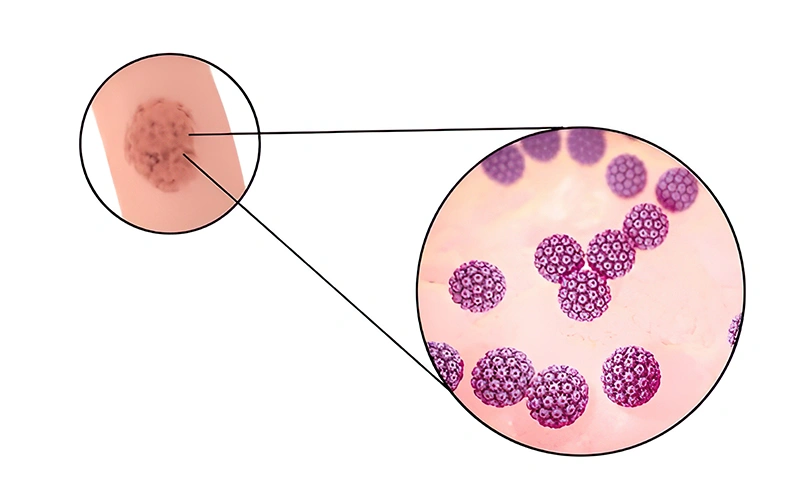
Genital warts appear as small skin lesions in the genital area of the body due to infection with the HPV virus, and they have a color similar to the skin or darker. This skin lesion is usually confined to the genital area and around the anus and is not seen on the hands or feet; warts on the hands or feet are most often caused by other types of the HPV virus.
When genital warts are cut or burned off under unhygienic conditions using home methods, they give rise to various complications. Among the complications of removing genital warts at home are the spread of infection in that area and bleeding. Using improper and unhygienic methods can cause skin problems or prolong the course of treatment.
Spread of the HPV virus to other areas of the skin
The HPV virus is a highly contagious virus that is transmitted mainly through skin-to-skin contact. Using home remedies, by irritating and damaging the skin, causes the disease to spread in that area.
Incomplete removal or recurrence of genital warts
Cutting or burning off this skin lesion using incorrect treatment methods can lead to incomplete removal of the wart and significantly increase the likelihood of its recurrence. Failing to use standard methods such as cryotherapy, laser, or approved medication-based approaches not only reduces the effectiveness of treatment but may also carry the risk of spreading the infection or increasing the number of lesions. So, to avoid the complications of picking off genital warts, we recommend choosing scientific methods for recovery.
Is picking off genital warts dangerous?
Yes. Picking off a genital wart (Genital Wart) can carry many risks. Bleeding, infection, and even the spread of the HPV virus are among the most important complications of doing this. In addition, manipulating or picking off a wart can disrupt the course of treatment and cause it to recur. The human papillomavirus (Human Papillomavirus) is the main cause of genital warts and remains in the deep layers of the skin. For this reason, picking off a wart not only fails to eliminate it at its root, but also brings skin damage, the formation of a wound, the persistence of a scar, and an increased likelihood of transmitting the disease to a sexual partner. Therefore, it is recommended to refrain from picking off warts and to see a specialist physician for treatment. Scientific methods such as freezing (cryotherapy), laser therapy, or the use of topical creams are more effective solutions for controlling and treating this disease.
Methods for treating genital warts using scientific approaches
Depending on the number of genital warts, the area being treated, and the patient's age, the specialist physician treating this skin growth recommends appropriate treatment methods such as medication, surgery, laser, cryotherapy, electrocautery, surgery, and topical medications. These treatment methods have fewer complications compared with home methods. Below, we discuss the ways to eliminate genital warts in more detail.
Cryotherapy
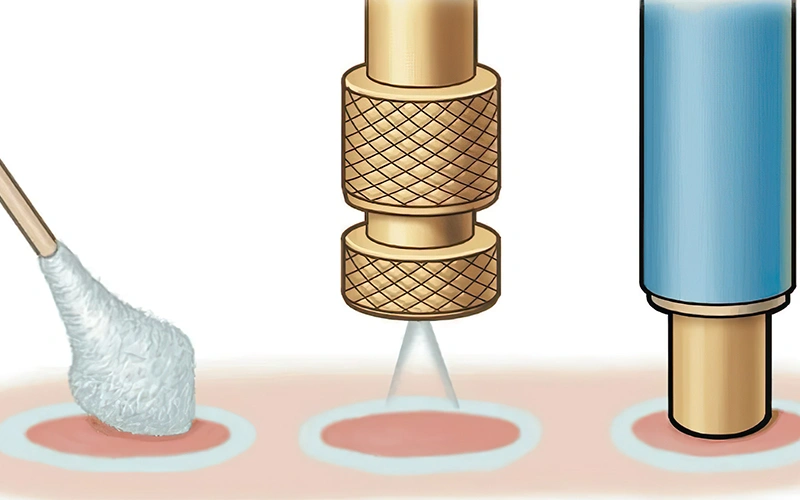
Cryotherapy is a minimally invasive method for treating genital warts and cervical cancer, in which the physician applies intense cold to the affected tissue so that the tissue of this skin lesion is destroyed and eliminated.
Laser therapy
Another minimally invasive method for treating genital warts is laser therapy, during which the skin growth is burned off. Before the procedure, the physician may use local anesthesia.
Electrocautery
Electrocautery is a minimally invasive method in which the physician applies an electric current directly to the skin tissue in order to burn it. This method is performed using a handheld device and with two approaches, monopolar and bipolar. In the monopolar approach, a small device is used; but in the bipolar approach, a tweezer-like probe is used to apply pressure in emergency situations. Among the advantages of this surgical method are its high effectiveness and precision.
Surgery (surgical blade)
Surgery with a blade is one of the invasive methods for treating genital warts. During this procedure, the physician uses local anesthesia and removes the infected area with a surgical blade.
Topical medications
In the medication-based treatment of genital warts, topical creams and ointments are used. The duration of medication use depends on the physician's instructions. Imiquimod cream or podophyllin is usually used in medication therapy. These medications are applied directly to the skin lesion and, by strengthening the body's immune system, help fight the HPV virus and accelerate recovery.
Comparison of methods for removing genital warts
Treatment methods | Method of treatment | Side effects |
Cryotherapy (freezing) | Freezing the treatment area | Blistering, skin discoloration |
Laser therapy | Burning the lesion with a laser | Pain, inflammation |
Topical medications | Use of a cream or solution | Burning sensation, redness, and skin inflammation |
Surgery | Cutting the wart with a surgical blade | Pain, bleeding |
Electrocautery | Eliminating the wart with an electric current | Pain, scar formation |
Misdiagnosis of genital warts
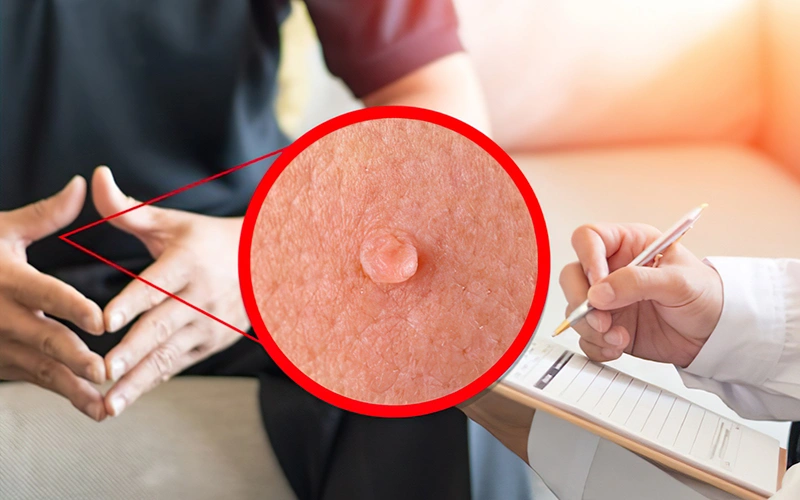
Genital warts and skin moles may look similar in appearance, but their cause and methods of treatment are completely different. Genital warts are soft, fleshy growths, usually skin-colored or pink, that appear in the genital, anal, or surrounding areas. These skin lesions are caused by the HPV virus and, in most cases, are transmitted through sexual contact. Skin moles, on the other hand, are usually harmless lesions that form from the accumulation of melanocytes (pigment-producing cells) in the skin. These moles can have various colors, such as brown, black, and red. Their size and shape also vary.
The most important difference between genital warts and skin moles is the necessity and manner of removing them. Removing skin moles is usually done if they undergo suspicious changes in appearance; however, eliminating genital warts should not be postponed. Also, if, because of a misdiagnosis, you use home methods to eliminate genital warts, these growths will multiply in that area. The risks and complications of genital warts can in some cases be serious and irreversible. If you have had a high-risk sexual encounter or your partner is a carrier of this virus, see a physician before resorting to home methods.
Final remarks
Using home remedies to treat warts carries dangerous, irreversible complications that increase the likelihood of spreading the HPV virus throughout the genital area and cause bleeding and pain. In this article, in addition to reviewing the complications of removing genital warts, we also introduced the evidence-based methods for treating this condition. Before turning to home methods, consult a specialist physician so that, depending on the number of genital warts and the affected area, they can recommend the best treatment approach with the fewest side effects.
Frequently asked questions
Actions & related links
Related articles
All articlesWhat Is Polycystic Kidney Disease? (Fetal and Adult PKD)
What is polycystic kidney disease? Learn about inherited ADPKD and ARPKD, fetal and adult symptoms, complications, diagnosis, medicines, surgery, diet, fluids, and prevention-focused care.
What Is a Renal Cortical Cyst? Symptoms, Diagnosis, and Treatment
Renal cortical cyst | Simple vs. complex kidney cysts | Warning symptoms | Diagnosis and treatment | Needle drainage, laparoscopy, medication, and ablation
Kidney Transplant: Cost, Blood Type Compatibility, and Surgical Method
What is kidney transplant? Learn about cost considerations, operation duration and method, diet, who may not be eligible, success rates, isolation precautions, and post-transplant care.
What Is Pyelonephritis? Kidney Infection Symptoms, Diagnosis, and Treatment
What is pyelonephritis? Learn kidney infection symptoms in women, children, men, and pregnancy; diagnosis, antibiotics, treatment, emergency warning signs, and cystitis differences.
Comments
0 comments
No comments yet. Be the first to share your thoughts.